

How Concert Tours Stay On Time
Concert tours don’t stay on time by accident. They stay on time through disciplined routing, structured load-in execution, and consistent communication between trucking, production, and venue teams.
When one piece slips, the entire schedule shifts — and delays compound across cities.
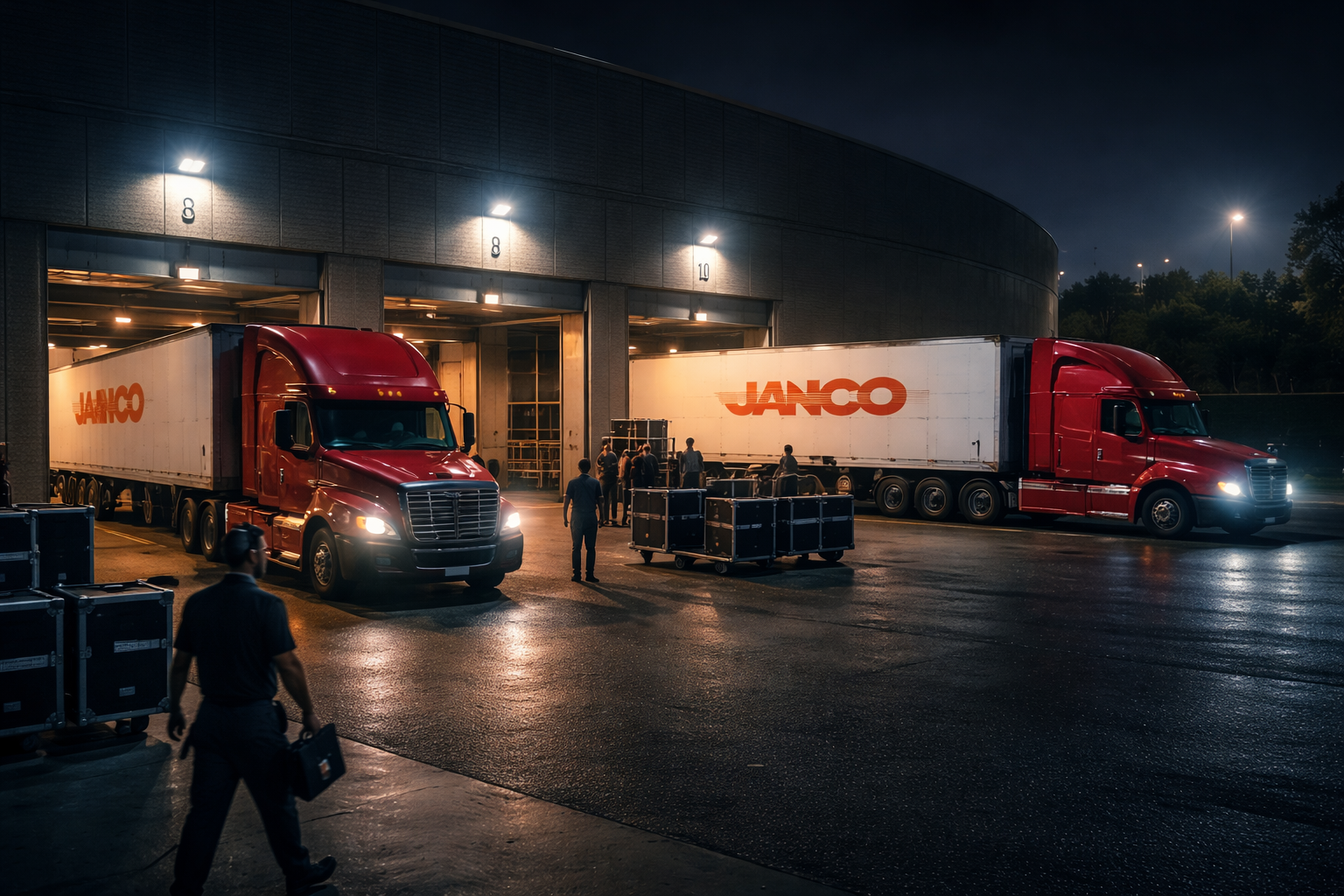
Why Tour Timing Matters
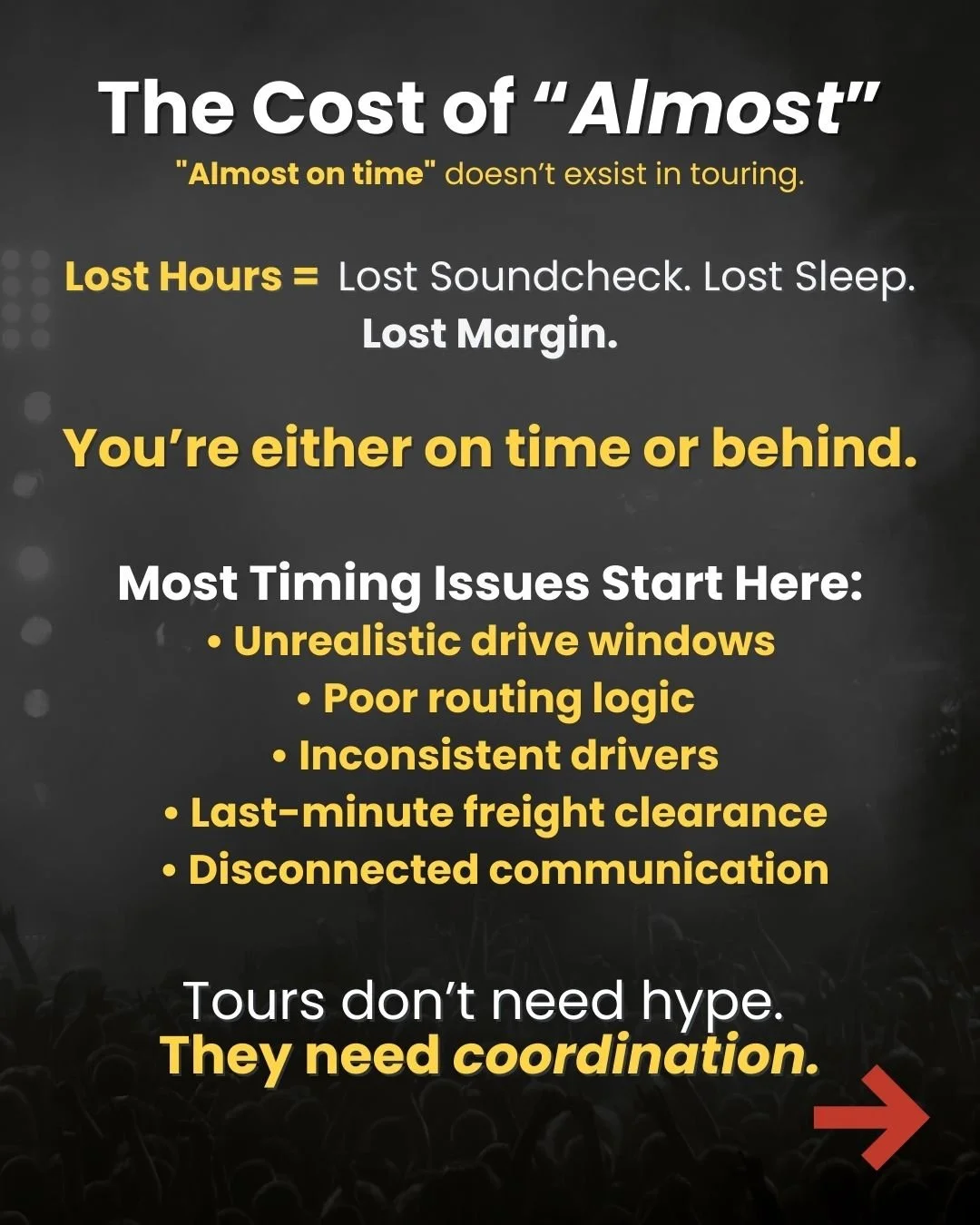
Live events run on fixed windows: venue dock access, labor schedules, soundcheck timing, doors, and show start. Unlike standard freight, touring schedules have hard deadlines — and the cost of “almost on time” shows up fast.
- Venue access windows and dock schedules
- Labor and union timing constraints
- Curfews and contracted performance windows
- Compressed build schedules when a truck arrives late
- Ripple effects across a multi-city run
If you’re looking for a dedicated tour trucking partner, start there — then connect it back to concert logistics planning.
The 5 Systems That Keep Tours On Schedule
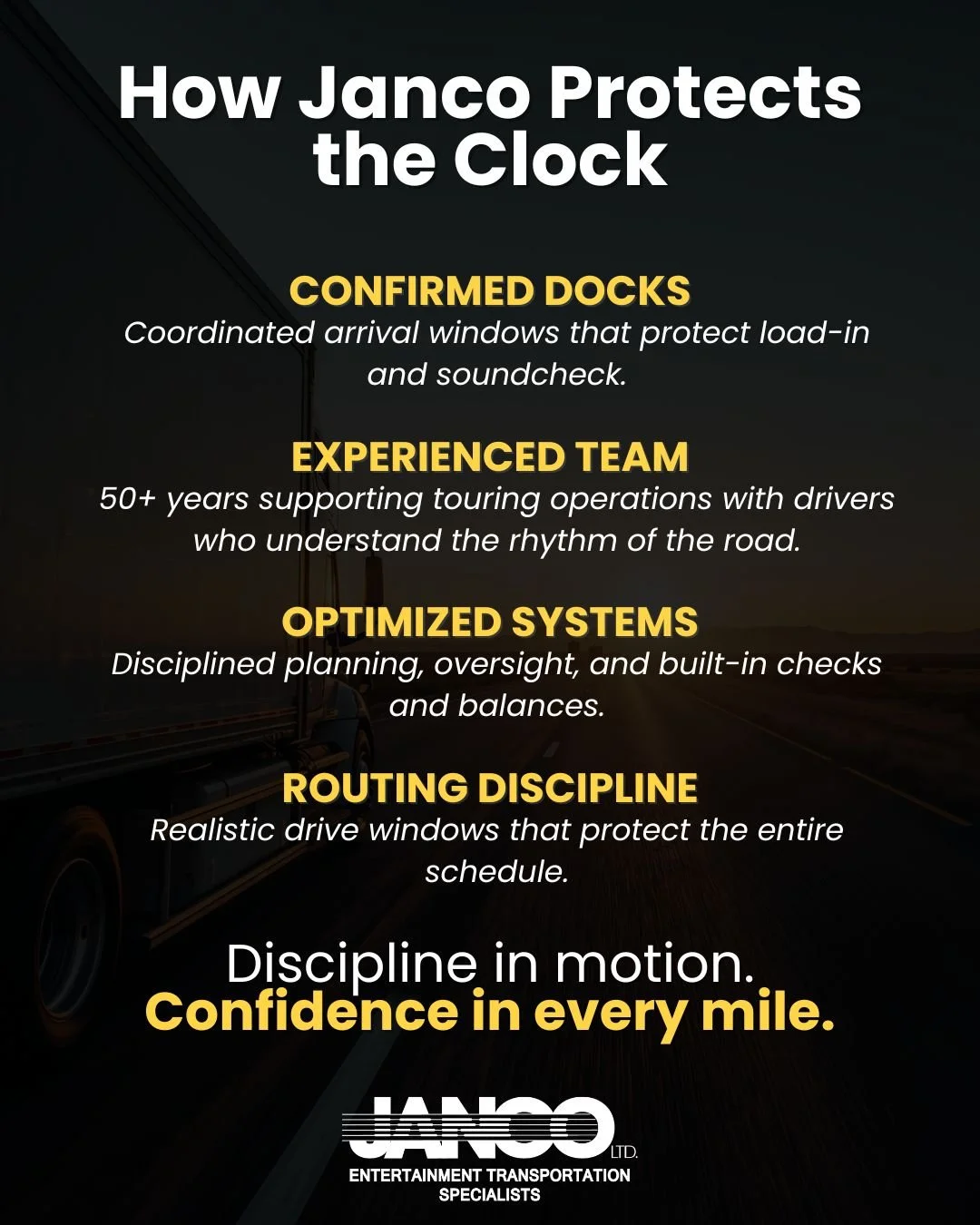
The tours that consistently stay on time are rarely “chaotic behind the scenes.” They’re structured. Discipline in motion. Confidence in every mile.
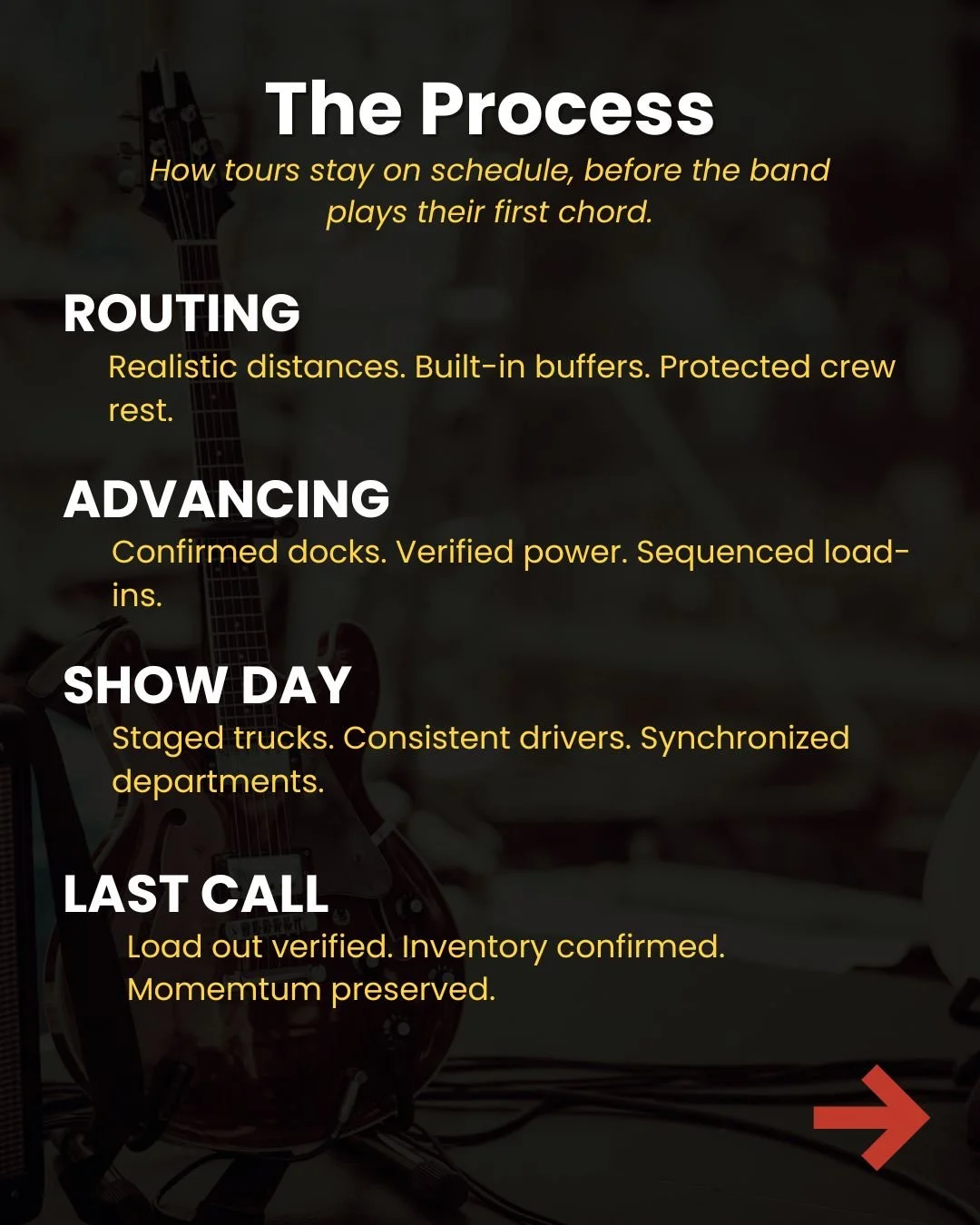
1) Routing Discipline
Routing isn’t just mileage. It’s timing strategy — built around realistic drive times, venue windows, staging needs, and overnight repositioning. Good routing protects crew rest and reduces show-day risk.
Related: Tour Routing & Multi-City Planning
2) Load-In Sequencing
Load-in success depends on trailer order, dock timing, and execution sequencing. Miss the dock window and the day compresses. That’s why touring operations treat load-in like an engineered process.
Related: Load-In & Load-Out Management
3) Equipment Staging
The easiest way to ruin tomorrow is a sloppy load-out tonight. Staging and pack order determine how quickly gear comes off a trailer, how smoothly departments can build, and how fast the tour can reset after show.
4) Communication Protocol
Tours stay on time when production leadership, drivers, and venue teams share the same plan: arrival timing, dock access, points of contact, and escalation paths. Communication reduces surprises.
5) Contingency Planning
Weather, traffic, mechanical issues, and venue constraints happen. Strong tour logistics includes buffer planning and contingency routes so a small disruption doesn’t become a missed show.
What Causes Tours to Fall Behind Schedule
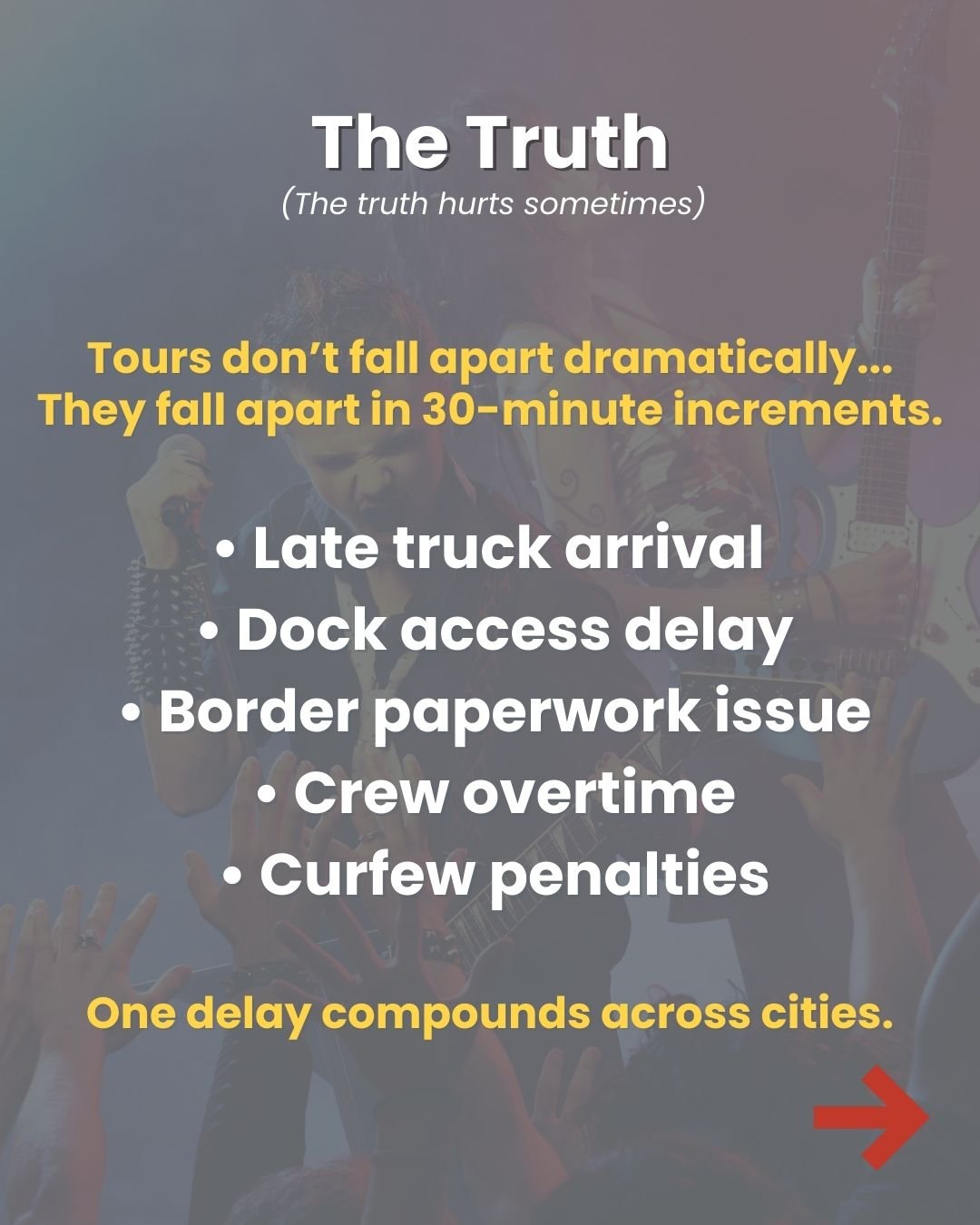
Tours rarely “fall apart” all at once — they fall behind in 30-minute increments. Here are the most common causes:
- Unrealistic drive time assumptions and tight turns between cities
- Missed dock windows due to congestion or poor advance coordination
- Poor trailer sequencing that blocks departments from building efficiently
- Late load-outs that delay overnight repositioning
- Disconnected communication across production, trucking, and venue teams
- Cross-border and checkpoint delays without buffer planning
Why Tour Trucking Is Different From Freight
Freight typically operates on delivery windows. Tour trucking operates on performance deadlines. Timing protects the show, the crew, and the equipment — and every decision is tied back to load-in and show start.
Learn more about tour-specific support: Tour Trucking.
A Typical Show-Day Timeline
Exact times vary by venue and production scale, but the structure stays consistent. When one step shifts, everything downstream compresses.
- Early arrival — trucks stage and prepare for dock access
- Dock access window — load-in begins
- Build sequence — staging, lighting, audio, video, backline
- Soundcheck / rehearsals — timing protected by earlier execution
- Doors — venue operations
- Show — fixed start time
- Load-out — reset for overnight repositioning
How Janco Supports Tour Timing
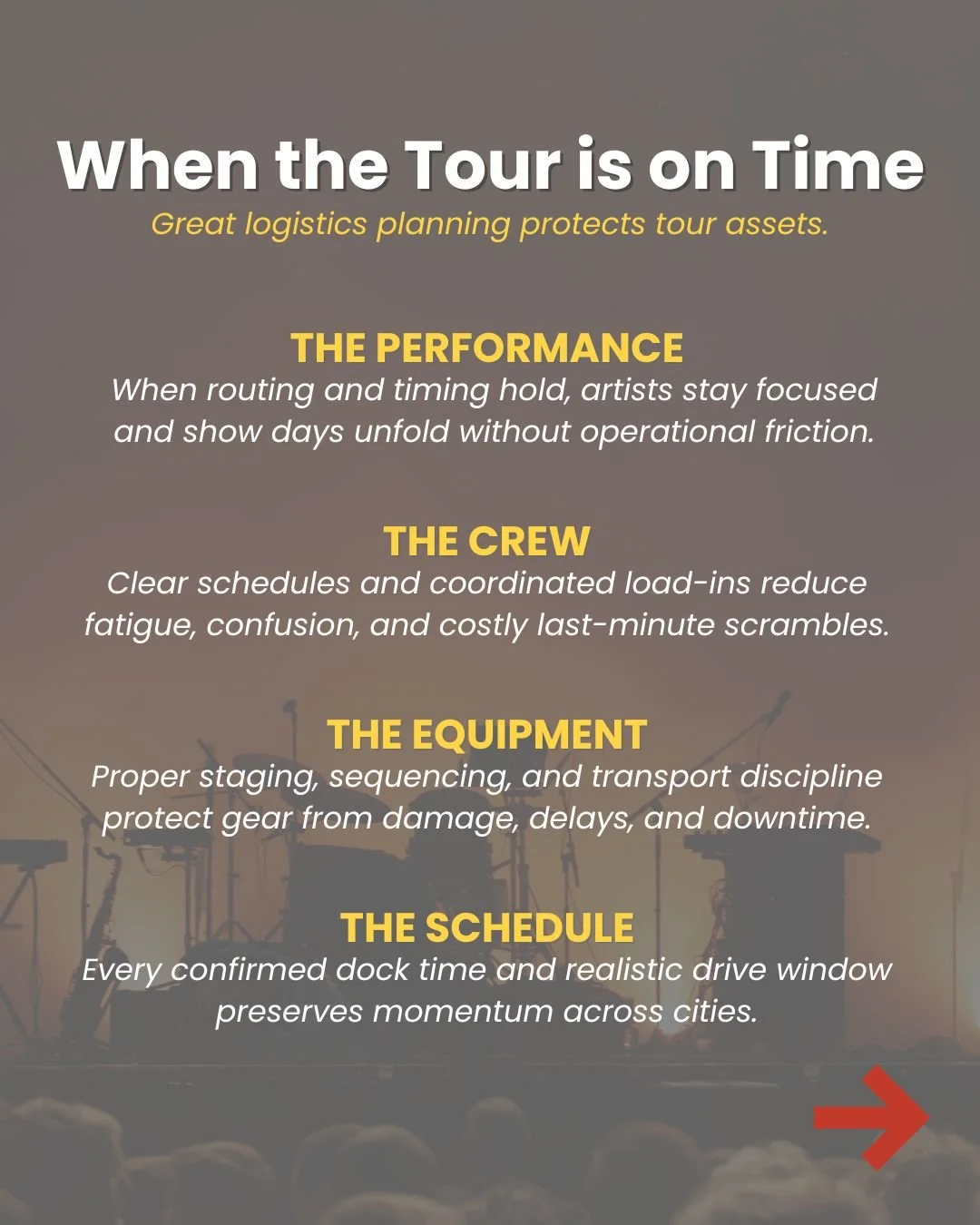
Janco supports concert logistics with operational planning and tour-aware execution — helping touring teams protect timing, reduce risk, and keep the production moving from city to city.
- Tour-aware routing aligned with venue windows and realistic timing
- Load-in coordination built around sequencing and dock access constraints
- Operational communication designed for production realities
- Consistency from planning through final load-out
Start with the main pillar: Concert Logistics.
FAQ: Tour Timing & Concert Logistics
How do concert tours stay on schedule?
Concert tours stay on schedule through disciplined routing, structured load-in sequencing, clear communication, and contingency planning that prevents small delays from compounding.
What is the biggest risk to tour timing?
Missed dock windows and poor load-out sequencing are two of the fastest ways tours fall behind. When the build compresses, the entire day shifts.
What happens if a tour truck is delayed?
A delay can compress load-in, reduce soundcheck time, increase labor costs, and create downstream timing issues across cities. Professional planning builds buffers and contingencies.
How is tour trucking different from regular freight?
Tour trucking is tied to performance deadlines and fixed venue windows. Freight can flex within delivery windows; tours often cannot.
What should touring teams plan first?
Start with routing realism and venue advance coordination. When drive times, dock access, and sequencing are aligned early, show-day execution becomes predictable.
Need Help Keeping Your Tour On Time?
If you’re building a tour schedule that can’t afford delays, we can help align routing, sequencing, and communication to protect show-day timing.
-
![How to Keep Concert Logistics on time]()
How to Keep Tours On Time
-
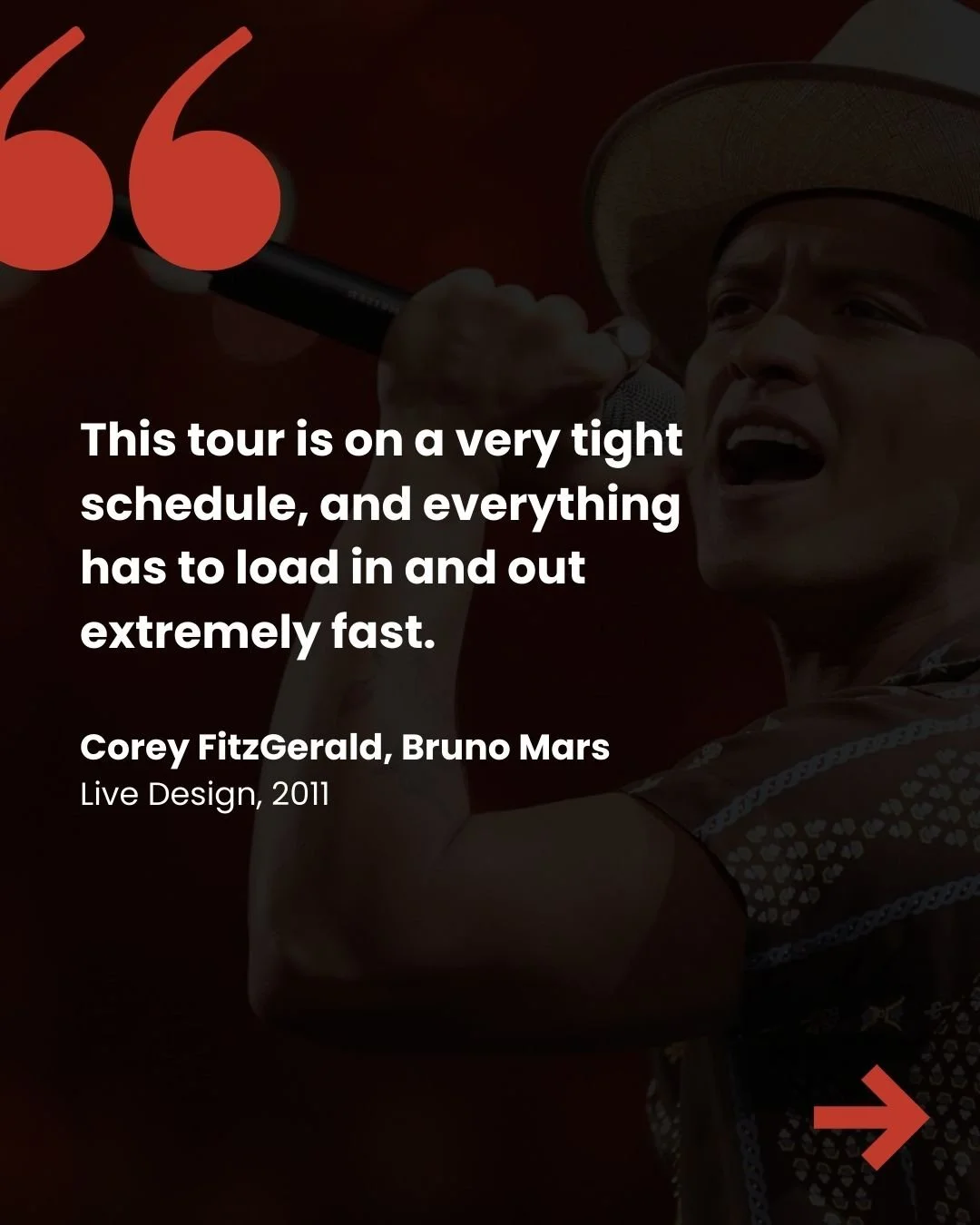
![Bruno mars quote on touring]()
Bruno Mars Always is on time
-
![The truth of poor tour management]()
The truth of poor tour management
-
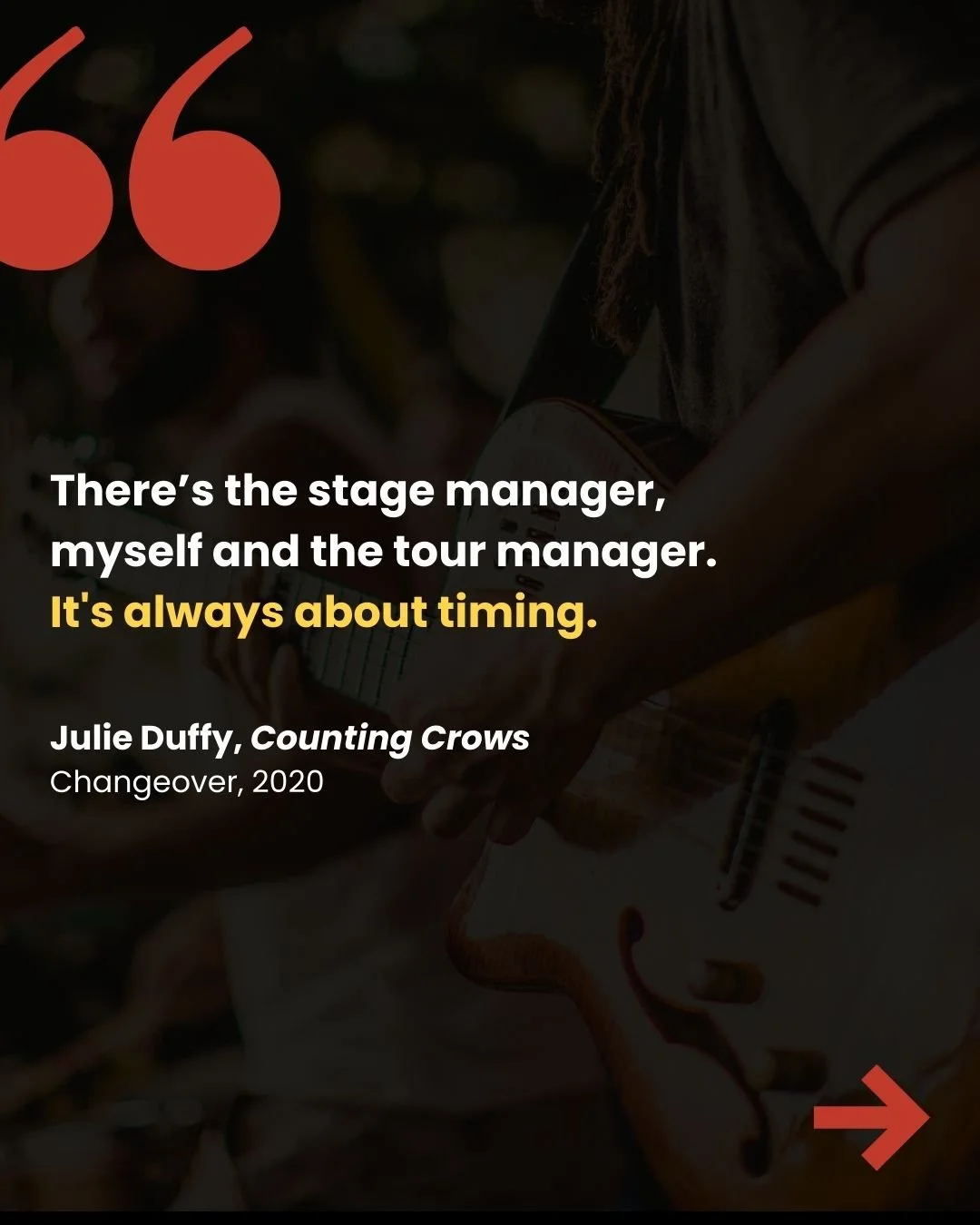
![counting crows on tour quote]()
Counting Crows knows it's all about timing
-
![the cost of almost is always more]()
the cost of "almost" usually is more
-
![the process of good tour logistics]()
the process
-
![concert logistics and timing]()
On time isn't luck. It's built.
-
![how janco keeps tours on time]()
how janco keeps tours on time
-
![bruce springsteen on timing and rock n roll]()
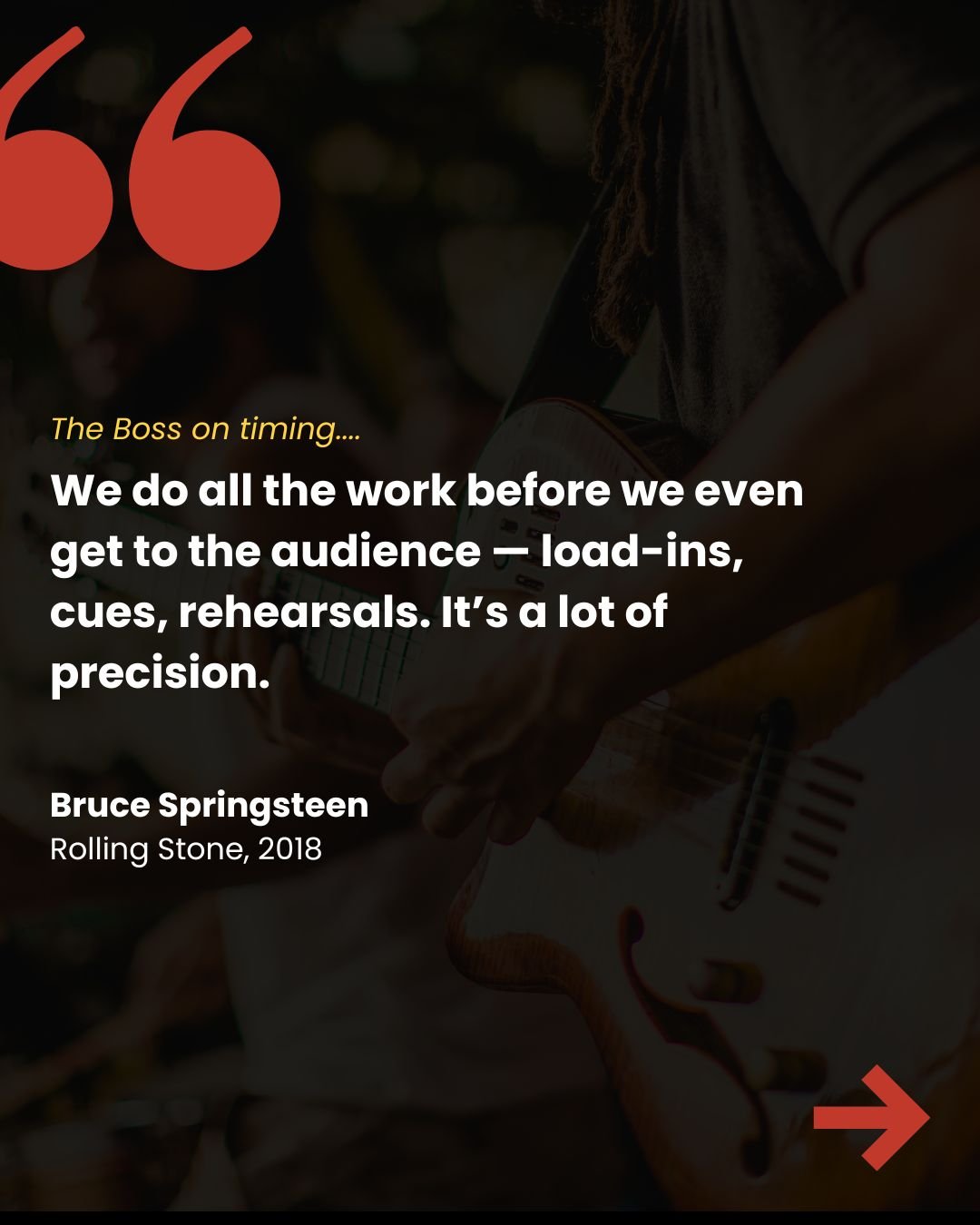
The boss knows
-
![janco concerting touring logistics]()
janco protects the clock
CONTACT
Questions. Concerns. Let’s Work Together. See You On The Road.